


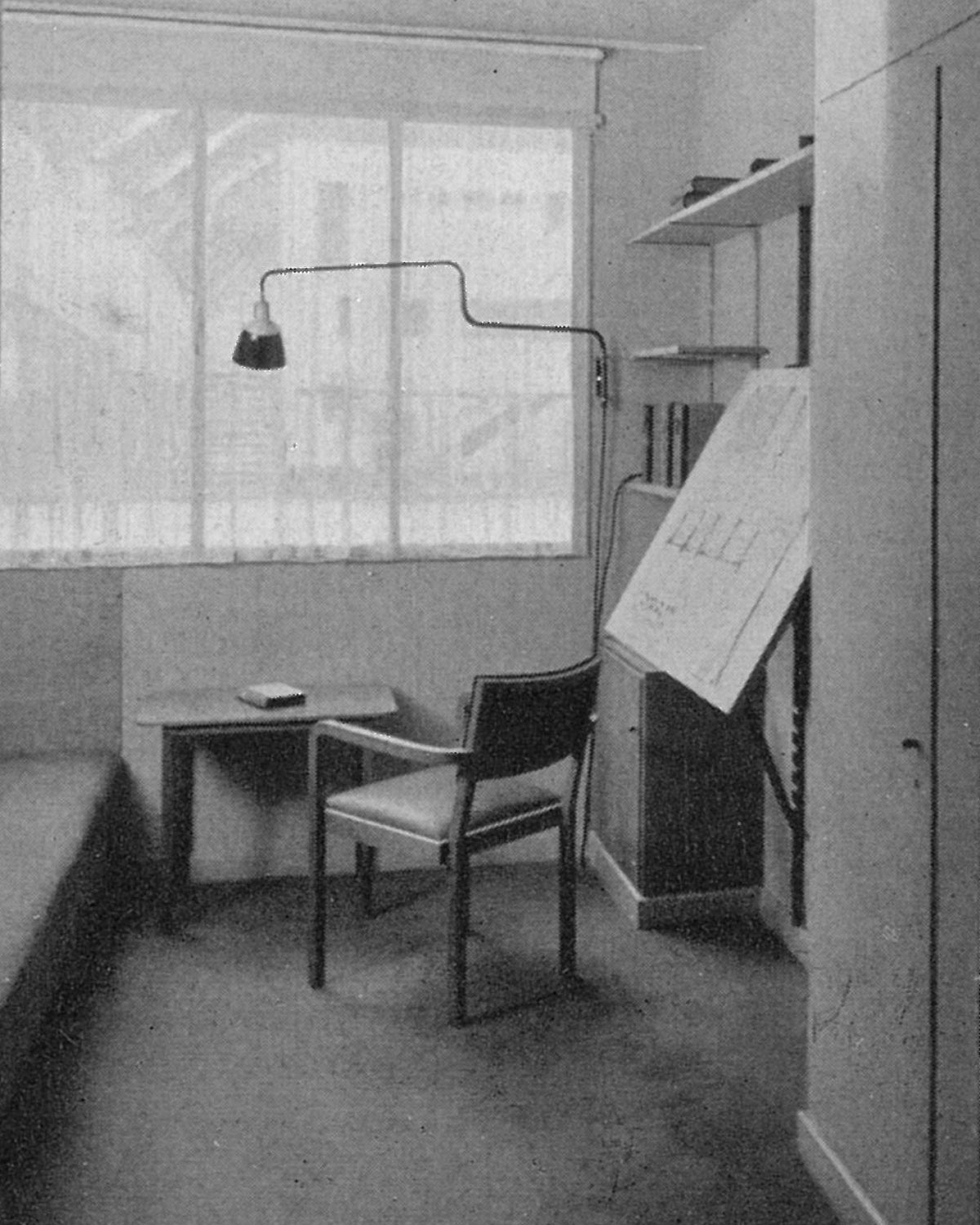
When the Bauhaus moves into its new buildings in Dessau in 1926, Midgard lamps selected by Walter Gropius form part of the interiors. The TYP 113 is used throughout the workshops, studios, student apartments and Masters’ Houses. Its precise, machine-like aesthetic embodies the emerging language of modernism.
Midgard and the Bauhaus
Right from the start, Fischer focuses his full creative attention not just on each lamp as a whole but on every single one of its components. In architecture and product design, the avantgarde takes much of its impetus from the urge to modernise tradition always of doing things. When the Bauhaus moves into its new buildings in Dessauin 1926, Midgard lamps are among the fixtures. Masters and students alike find their precise, machine-like aesthetic both modern and motivating. Art historian Robin Rehm has analysed the Bauhaus buildings and their original furnishings.In 1925, the Bauhaus goes to great effort to find out everything it can about lighting. At the suggestion of Walter Gropius, excursions are organised toOsram’s Lichthaus lighting centre in Berlin and the firm Körting & Mathiesen, or Kandem for short, in Leipzig. It isn’t known how the contact with Curt Fischer came about, but the records show an exchange of letters between Gropius and Fischer.

Historic photograph of Midgard TYP 113 Bauhaus task lamps in the reading room of the ADGB Trade Union School in Dessau. The building was designed by Hannes Meyer and Hans Wittwer at the Bauhaus, where Midgard luminaires were specified throughout the project. Photographer: Walter Peterhans, around 1930
An ideal reading lamp, rotatable in any direction
How do we live healthy and economically?
A series of educational and advertising films
by Humboldt Film GmbH from 1926 in 4 acts.
The Bauhaus Archive Berlin received the films
from the estate of Walter Gropius.
These are nitrate films, which are shown here
in a revised, digitised form.
Between Midgard lamps and Bauhaus projects
Multiple specimens of the Midgard table lamp TYP 113 are in use in Dessau. Historical film footage from Gropius’s masters’ house shows how simple it is to adjust. After 1928, the lamp is installed in the house of Josef Albers as well. The Midgard jointed-arm table lamp TYP 114/I is used in the administrative office next to the director’s room, in the architectural studio and in the students’ studio apartments.

Marcel Breuer | Weissenhof Estate | Photo: Dr. Lossen & Co., 1927

Original Midgard TYP 113 lamp from 1927 | Photo: Midgard Licht Archive
Marcel Breuer used the tablelamp TYP 113 for the first time in the town-house of Mart Stam in the Weißenhof-Siedlung in Stuttgart. As many designers of the modern he was enthusiastic about the midgard lamp, which he applied in many of his interiors.

When Marianne Brandt is interviewed for a Bauhaus issue of East German design magazine form+zweck in 1979, she says:
“Later on we envied the inventors of the Midgard lamp’s arm – our lamp was adjustable too, but nowhere near as elegant.”
Marianne Brandt (1893–1983), one of the school’s most outstanding and long underestimated female designers, studied at the Bauhaus and was intermittently in charge of the metal workshop. In the above quote, she is referring to the lamps she and Hin Bredendieck (1904–1995) designed for Kandem.

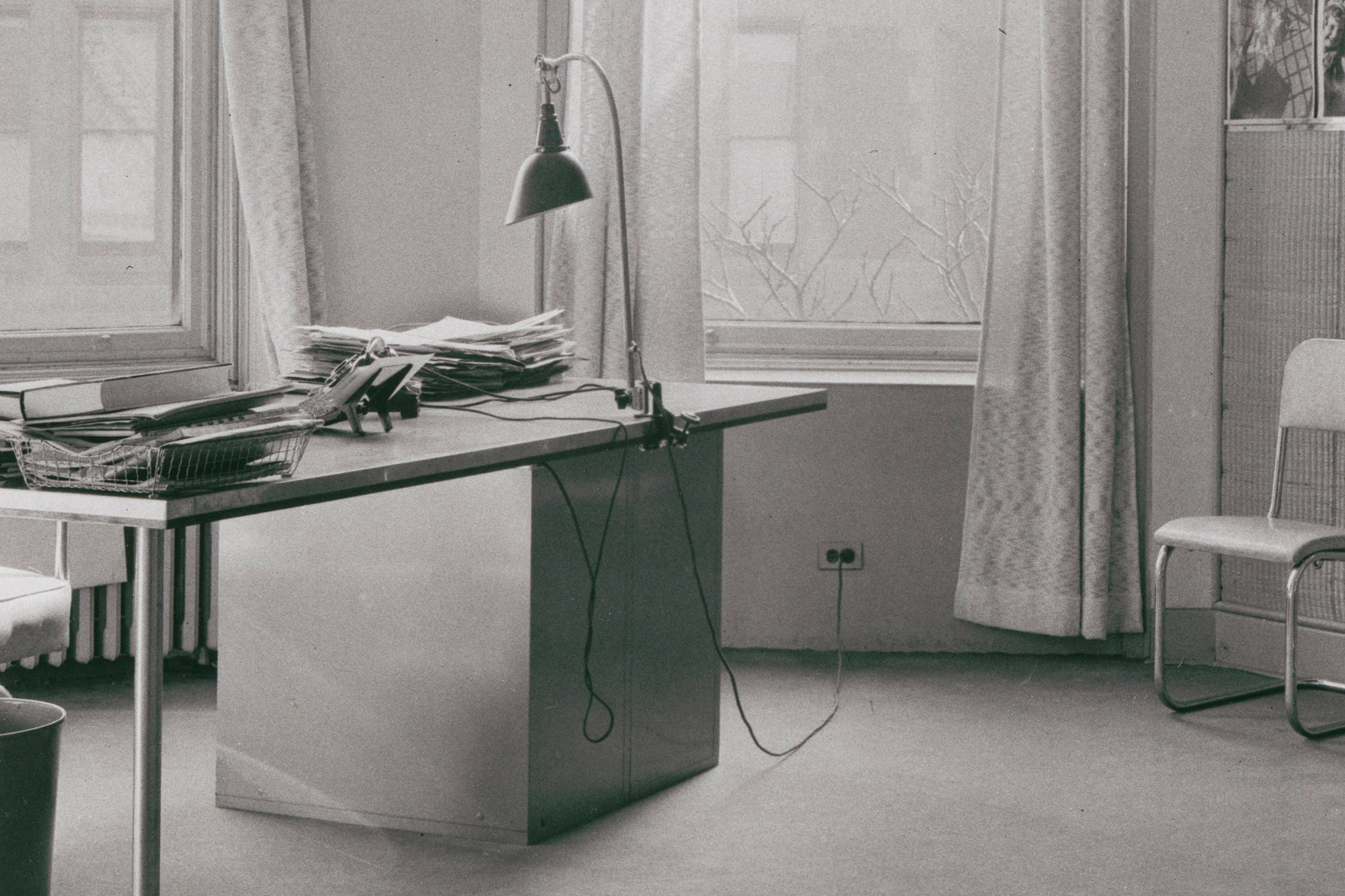
Photo: Henry Holmes Smith © Christopher Smith, Bauhaus-Archiv, Berlin
When the modern movement was stopped in Germany during the 1930s, many European designers and artists went to America. Some of them brought their favorite lights with them. László Moholy-Nagy installed his Midgard TYP 113 in his director’s room at the new Bauhaus Chicago in 1938.
