



TYP 113 | BAUHAUS LAMP
Known as the "Peitschenleuchte", Midgard TYP 113 is one of the earliest serially produced adjustable task lamps. Developed from Curt Fischer's pioneering work on directional light, its flexible arm and rotatable shade brought light precisely to the task - a principle that helped define Midgard long before adjustable lighting became a modern design standard.
Today, TYP 113 remains in the Midgard archive as a reference for the evolution of adjustable light.

MIDGARD + THE BAUHAUS
When the Bauhaus moved into its new buildings in Dessau in 1926, Midgard lamps selected by Walter Gropius formed part of the interiors. TYP 113 was used in workshops, studios, student apartments and the Masters' Houses. Its precise, machine-like construction matched the emerging language of modernism.
AN IDEAL READING LAMP, ROTATABLE IN ANY DIRECTION
The 1926 educational film series Neues Wohnen asked how modern life could become healthier and more economical. In the surviving footage, TYP 113 appears as a practical reading lamp whose light can be directed freely to the task.
The films were produced by Humboldt Film GmbH. The Bauhaus-Archiv Berlin received the nitrate films from the estate of Walter Gropius and preserves the digitised footage shown here.

AT THE BAUHAUS
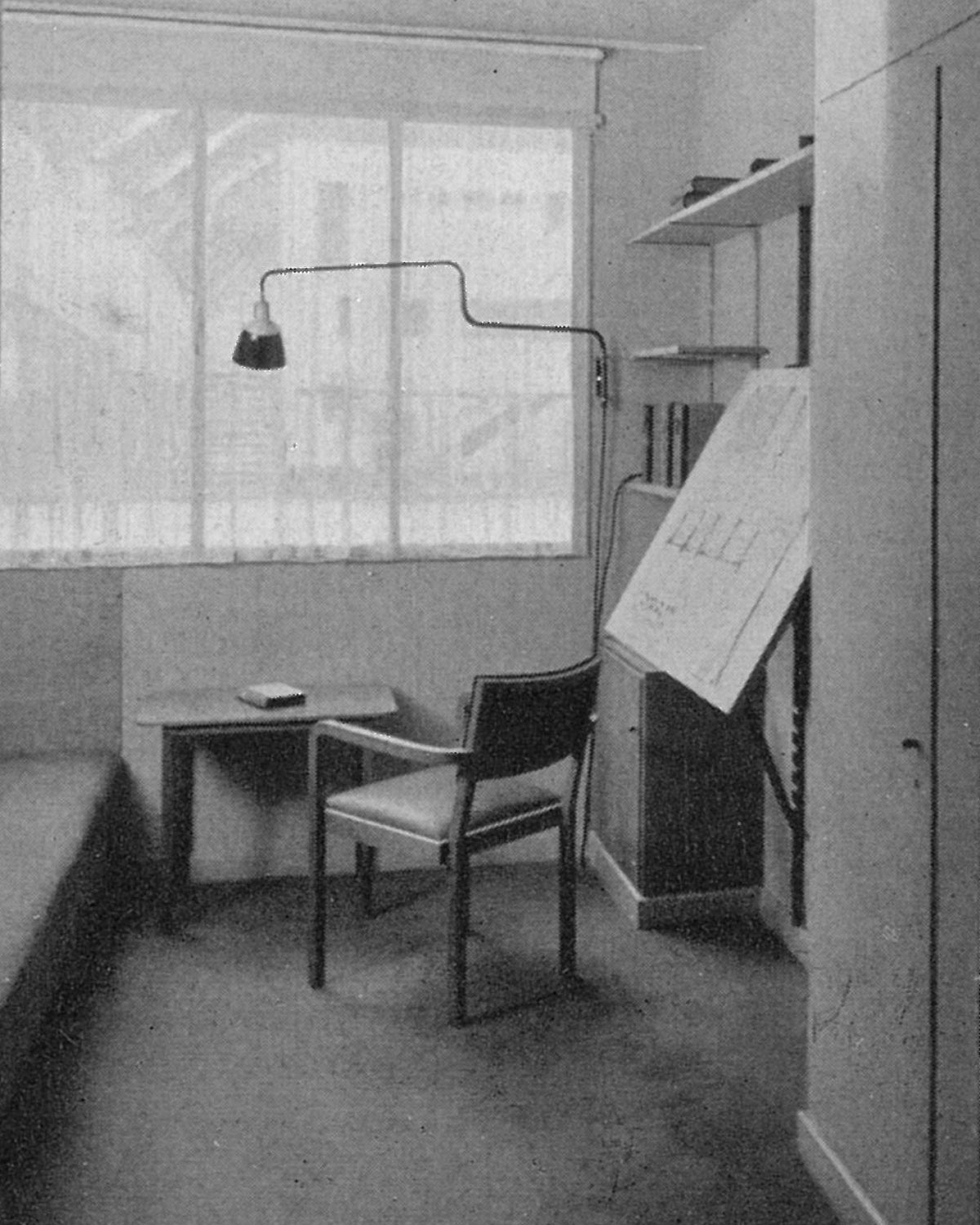
Historic photograph of Midgard TYP 113 task lamps in the reading room of the ADGB Trade Union School, designed by Hannes Meyer and Hans Wittwer. Photo: Walter Peterhans, around 1930.

Marcel Breuer | Weissenhof Estate, Stuttgart | Photo: Dr. Lossen & Co., 1927

Original Midgard TYP 113 lamp from 1927 | Photo: Midgard Licht Archive
FROM DESSAU TO WEISSENHOF
Marcel Breuer used TYP 113 in the townhouse designed by Mart Stam at the Weissenhof Estate in Stuttgart. Like other protagonists of the modern movement, Breuer repeatedly specified Midgard lamps in interiors where adjustable, task-oriented light was required.

When Marianne Brandt was interviewed for a Bauhaus issue of form+zweck in 1979, she recalled:
"Later on we envied the inventors of the Midgard lamp's arm - our lamp was adjustable too, but nowhere near as elegant."
Marianne Brandt studied at the Bauhaus and later led the metal workshop for a period. Her remark referred to the lamps she and Hin Bredendieck designed for Kandem.

FROM BAUHAUS TO NEW BAUHAUS
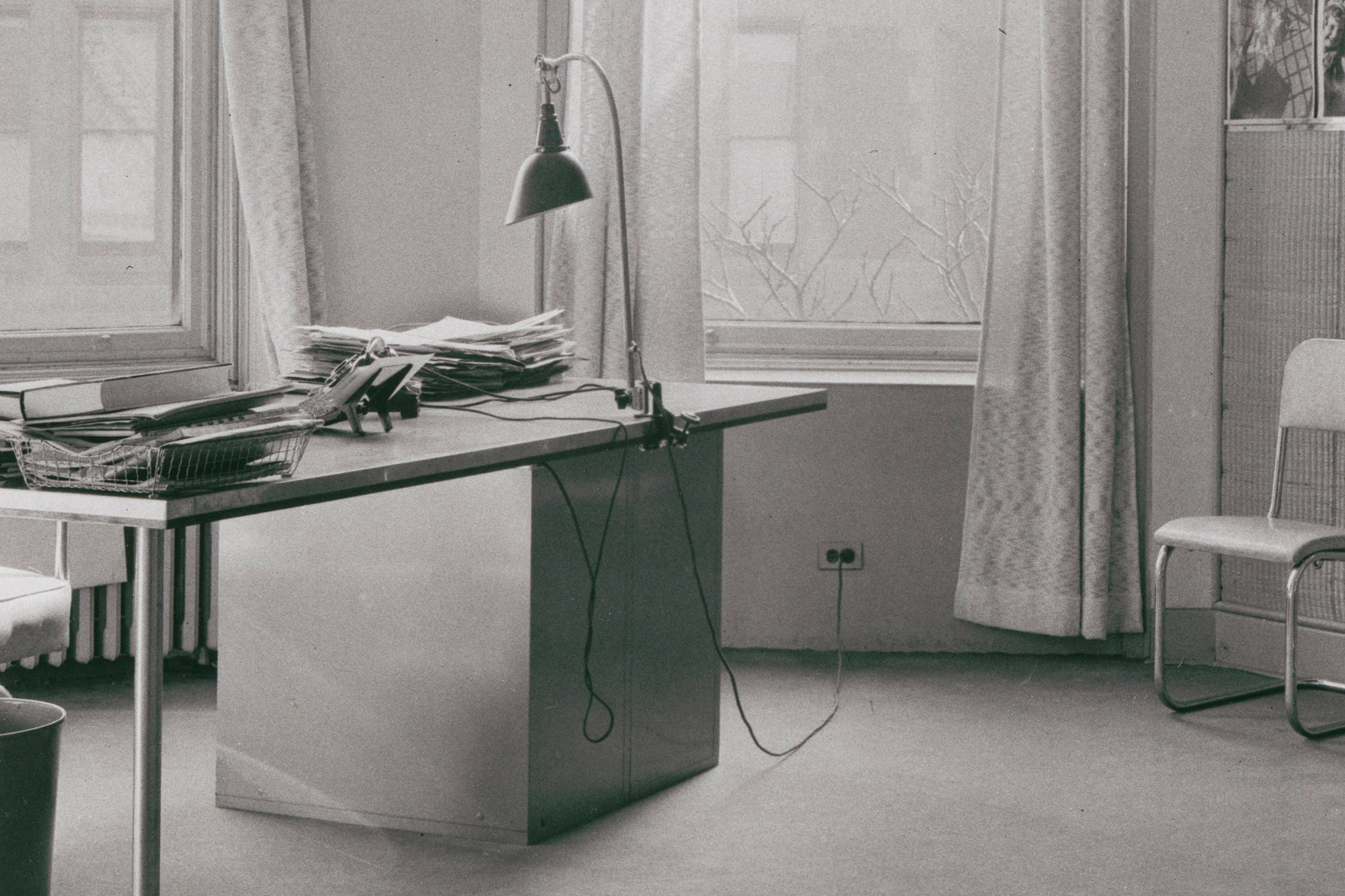
When the modern movement was forced out of Germany during the 1930s, many European designers and artists continued their work abroad. László Moholy-Nagy brought a Midgard TYP 113 with him and installed it in his director's office at the New Bauhaus in Chicago in 1938.
Photo: Henry Holmes Smith © Christopher Smith, Bauhaus-Archiv, Berlin.
THE PRINCIPLE EVOLVES
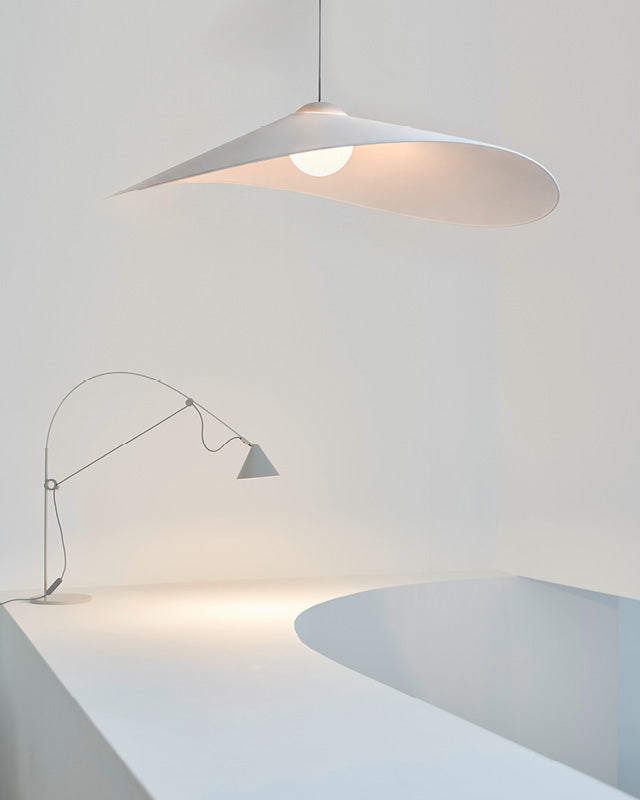
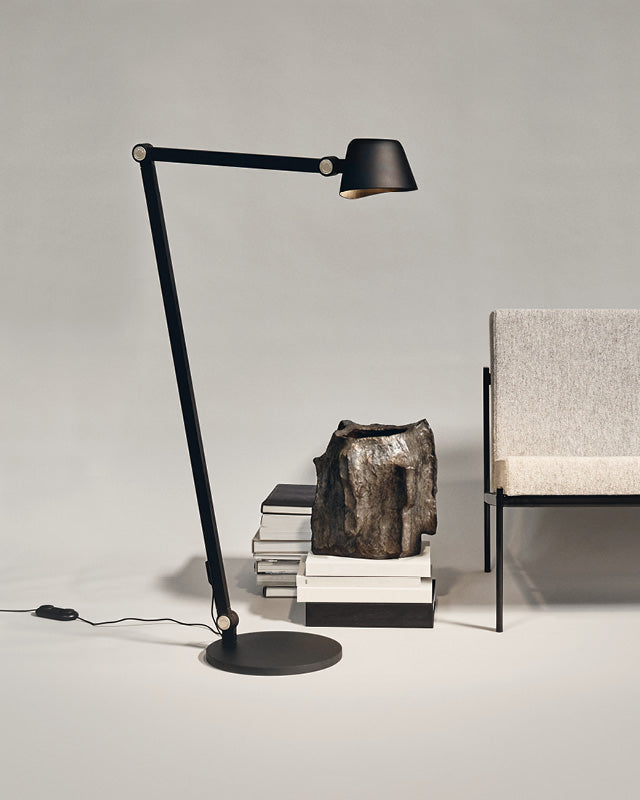
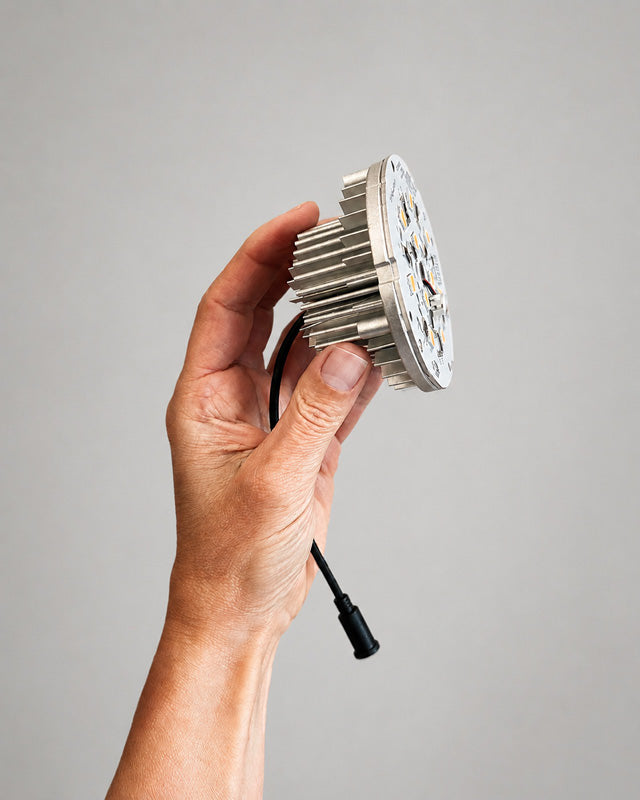
TYP 113 established a principle that has shaped Midgard for more than a century: light should move with the task. That idea continues in modular NEO - a contemporary evolution of Midgard's modular adjustable-lighting system, developed with modern LED technology, replaceable components and six-point adjustability.
